Strictly speaking granite is an.
Where would you find granite in ireland.
Any old buildings around the moors are built of granite.
It forms from the slow crystallization of magma below earth s surface.
Granite ˈ ɡ r æ n ɪ t is a common type of felsic intrusive igneous rock that is granular and phaneritic in texture.
For granite i only found info on northern ireland.
Granites can be predominantly white pink or gray in color depending on their mineralogy the word granite comes from the latin granum a grain in reference to the coarse grained structure of such a completely crystalline rock.
Customize your home or business aircraft.
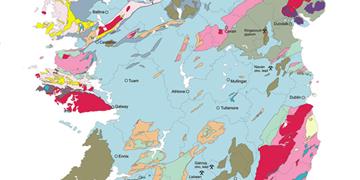
Irish bedrock maps shows both the onshore and offshore bedrock geology ireland.
Bedrock map of ireland.
These are particularly extensive in the ridge and valley landscape that runs across much of south west ireland in parts of counties tyrone and fermanagh and as inliers of older rock protruding as small hill or mountain groups like slieve bloom and slieve aughty in southern parts of the central lowlands.
Looking for a granite worktop in ireland.
Marble is more porous than granite so it would not be used for a kitchen worktop as much as granite as it may stain and is a lot more fragile.
The dartmoor pubs are particularly distinctive.
Located in dublin but covering the whole island we supply fit best granite worktops.
Granite is composed mainly of quartz and feldspar with minor amounts of mica amphiboles and other minerals this mineral composition usually gives granite a red pink gray or white color with dark mineral.
There is an old granite quarry at merrivale on the tavistock to princetown road but i think it is disused now.
Granite is a light colored igneous rock with grains large enough to be visible with the unaided eye.
If you visit either dartmoor or bodmin moor in cornwall the hills tors are all crowned with these massive granite formations.
As with granite marble is a natural product so you should expect to find natural characteristics such as veining colour and tone between slabs or within single slabs.
This was the beginning of the quaternary period and over the following 1 7 million years several periods of ice advance and retreat shaped the face of ireland evidence of only the last two glaciations can be seen.